Roy Chapman Andrews Legacy Expedition 2025
Flag 97 · June 15–29, 2025
An international team revisited Andrews’s Gobi research programme with Flag 97, combining fossil collecting, archaeology, botany and the study of nomadic life.
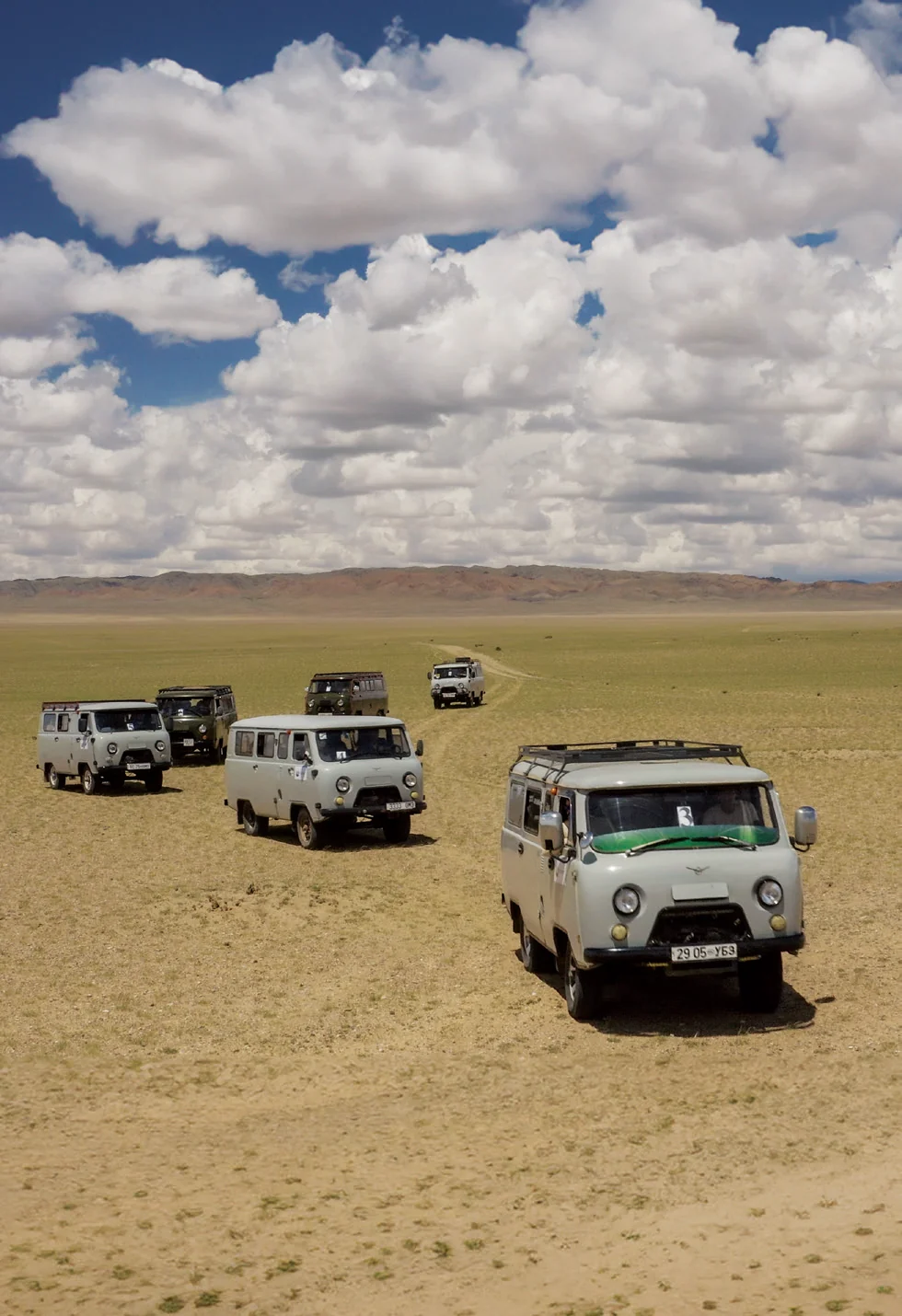
Robert Atwater’s team assembled in Ulaanbaatar on 15 June 2025 to undertake scientific work envisaged for Roy Chapman Andrews’s abandoned 1925 expedition. Thirty-five explorers and scientists from eight countries, including five Mongolian researchers, travelled with seventeen support staff on a circuit of more than 2,000 kilometres. Separate teams worked on palaeontology, archaeology, geology, botany and cultural heritage.
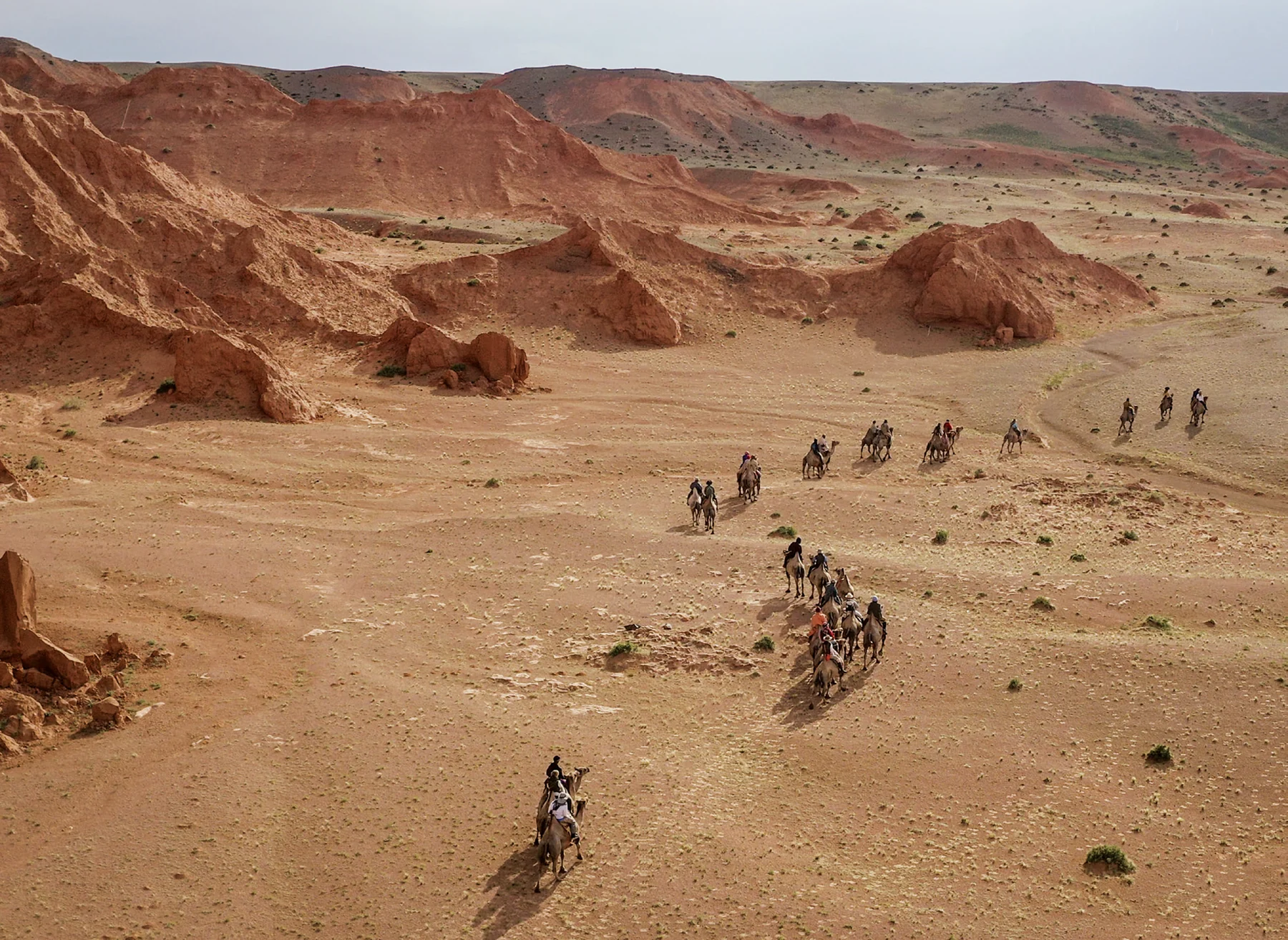
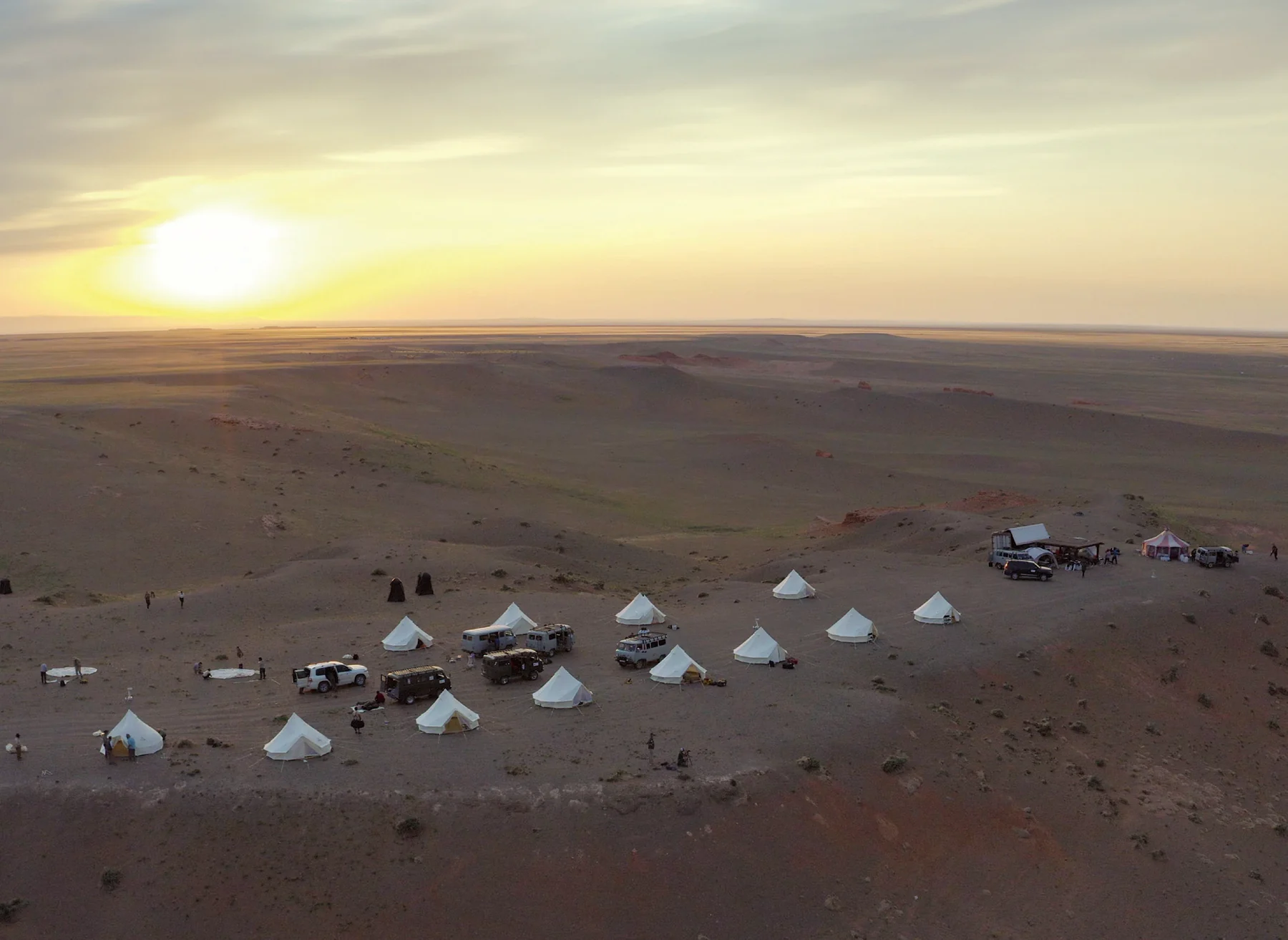
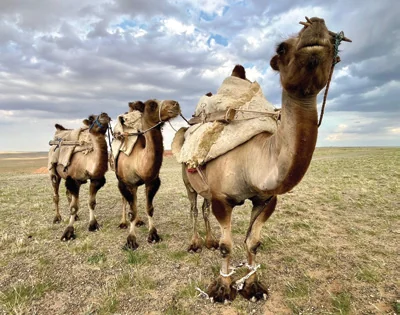
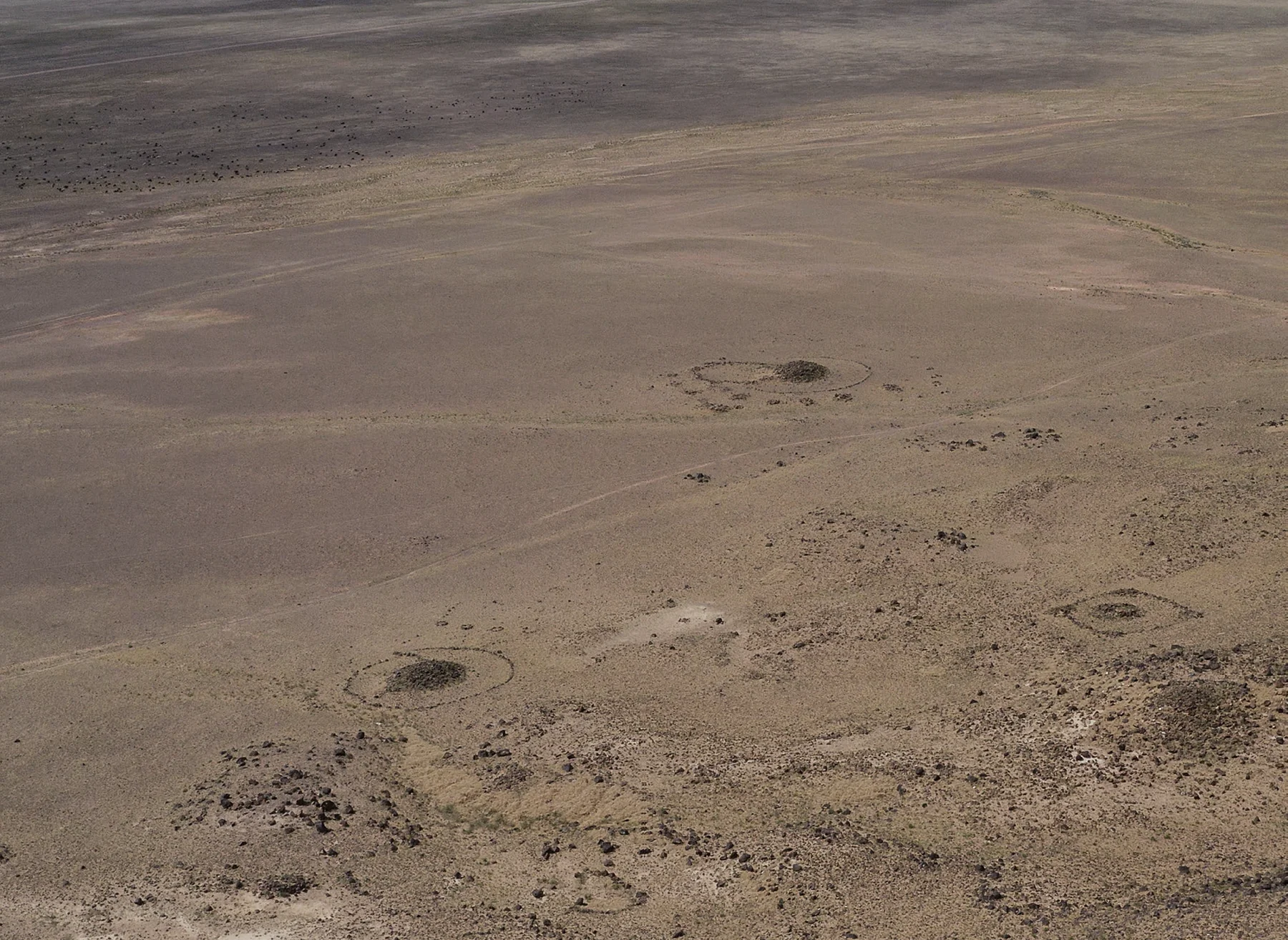
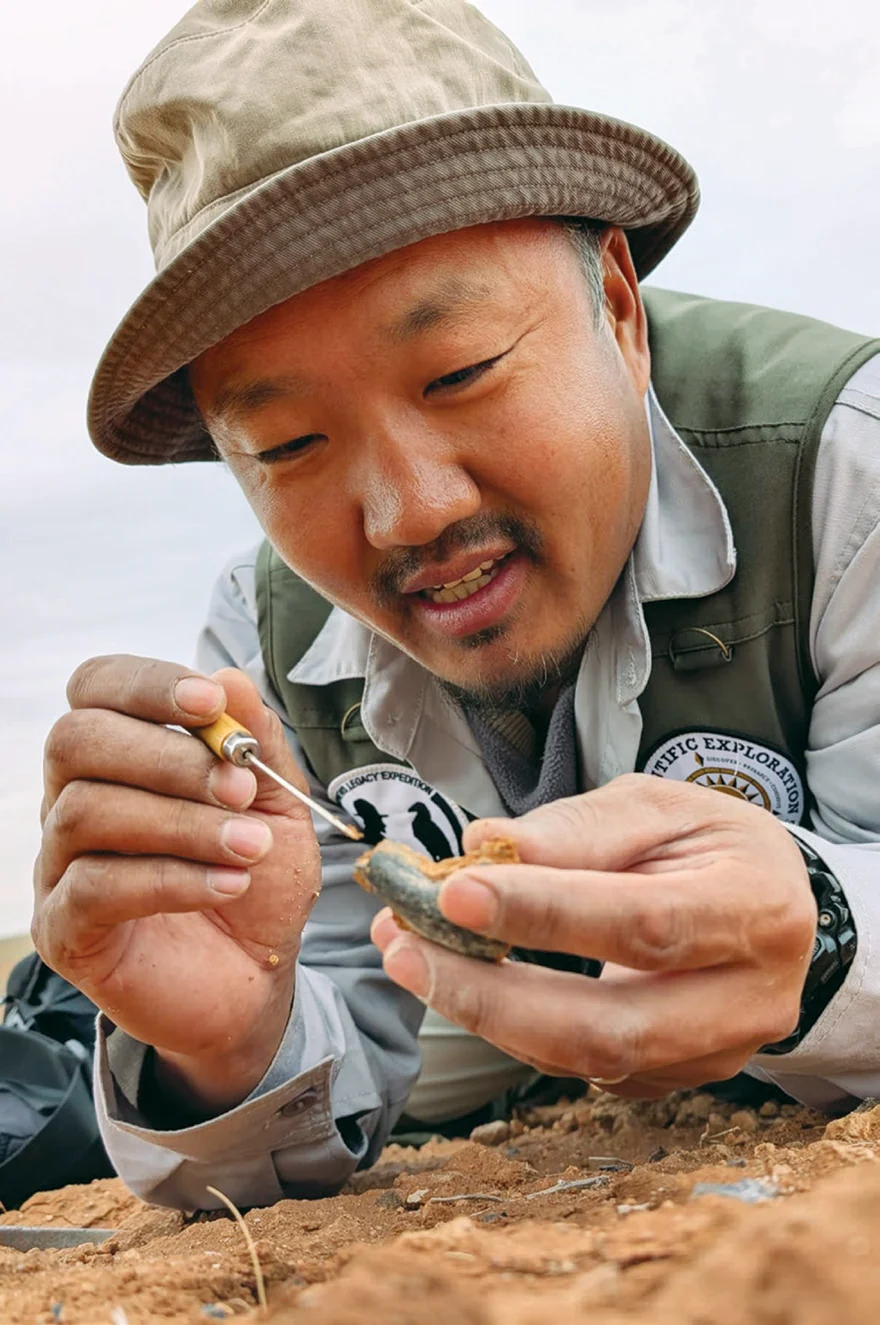
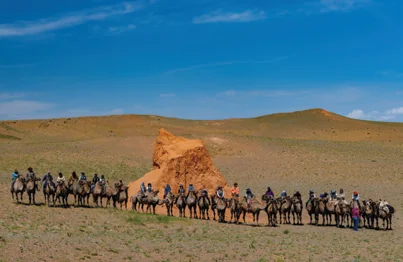
The first camp was established beside the Taats River on 16 June. Archaeologists surveyed six burial mounds at Taliv Khorem and eight at Khulastain Khorem; horse remains in three mounds suggested possible high-status burials. From 20 June the expedition worked in the Oosh Mountains, using camels to reach research sites. Finds included Psittacosaurus mongoliensis fossils, with a fragile tail stabilised for the Mongolian Institute of Paleontology.
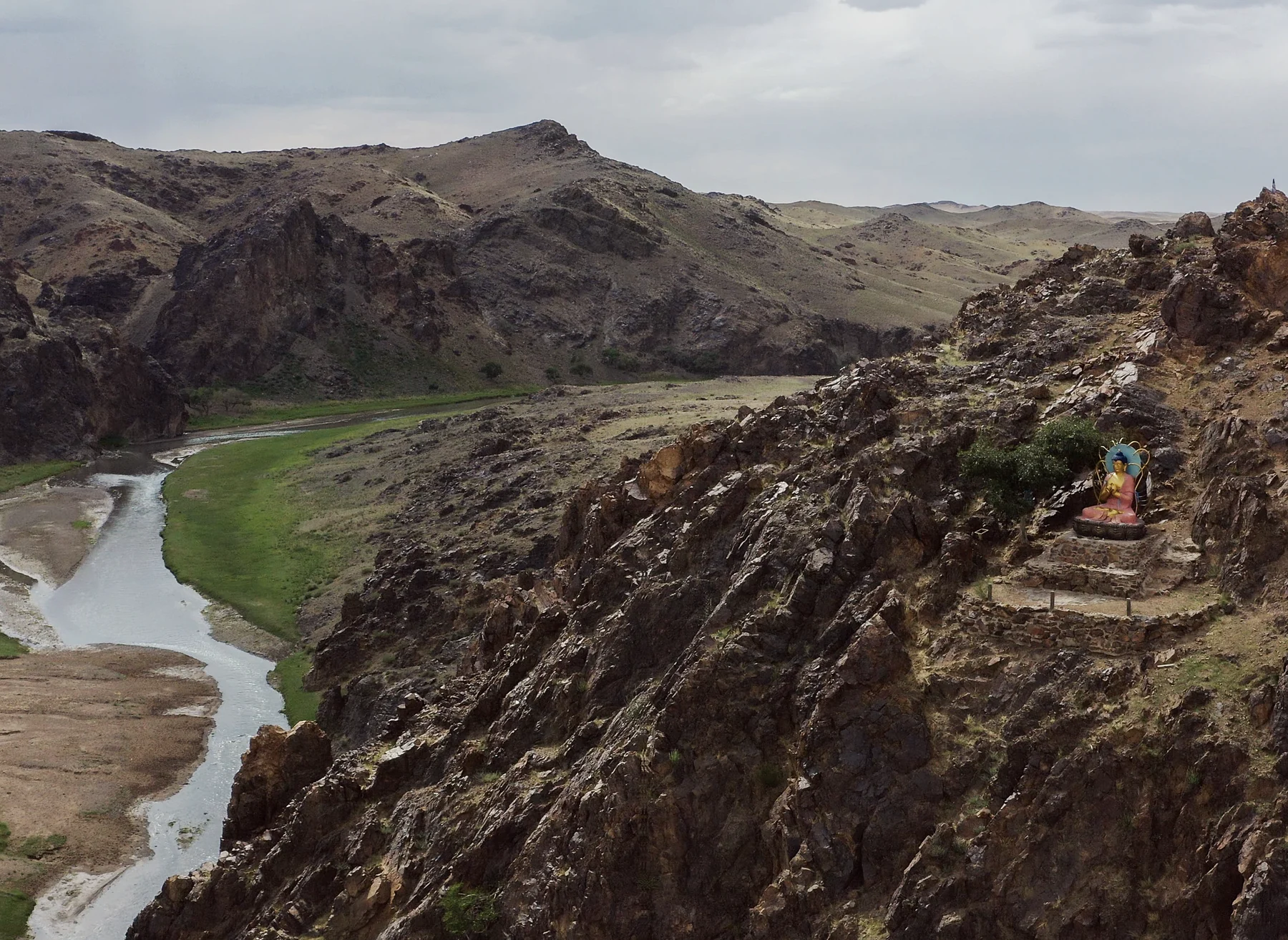
After visiting Ongi Monastery on 23 June, the team examined sites in the Luu Range and recorded small-mammal remains and a Paraceratherium tooth. They reached the Flaming Cliffs at Bayanzag on 25 June for four days of fieldwork. Palaeontologist Mainbayar Buuvei found a complete Protoceratops andrewsi skeleton.
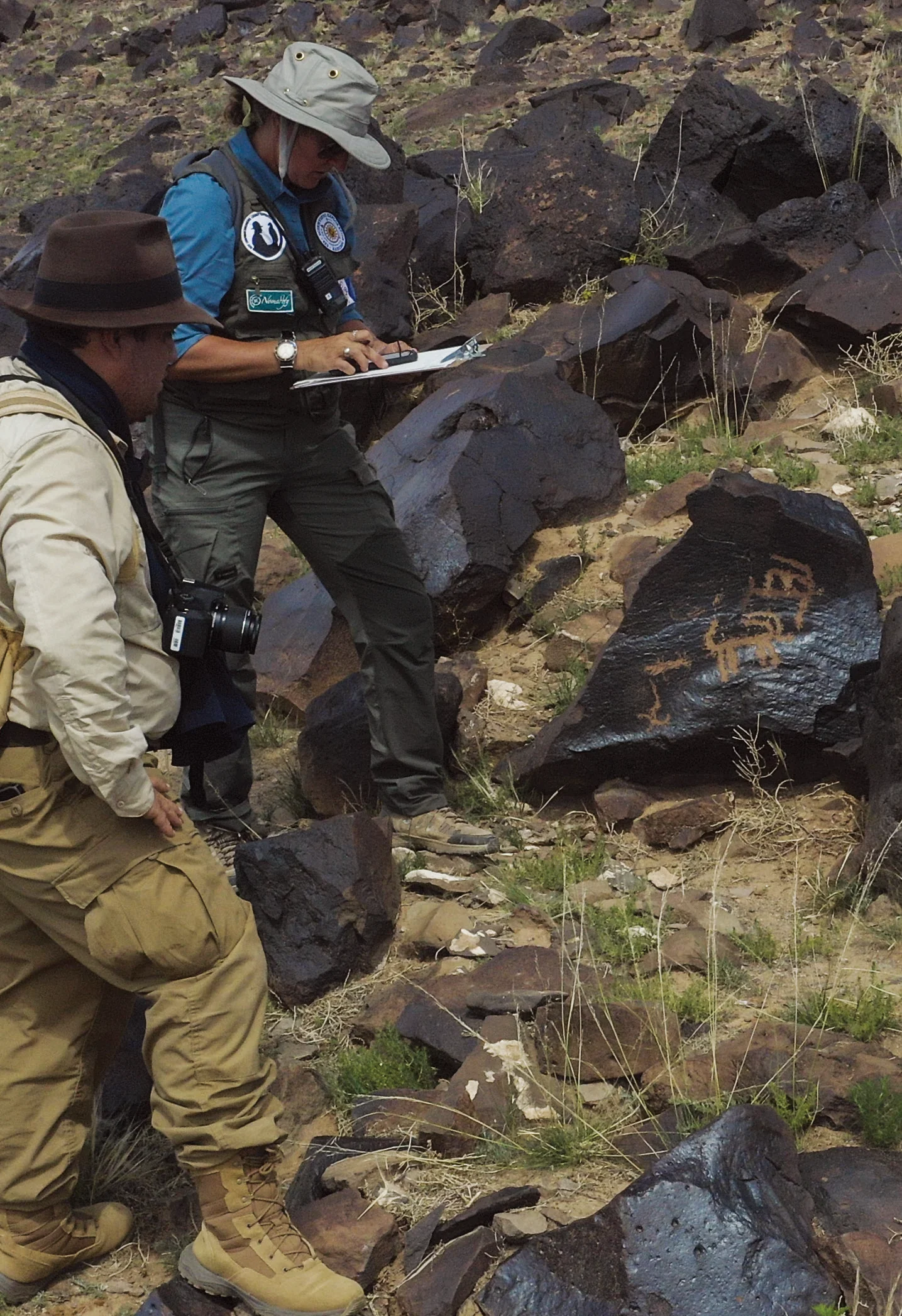
The Journal reports 1,391 fossilised bone fragments representing roughly 97 individuals and three complete dinosaur skeletons, alongside more than 100 plant specimens, brown moss and five lichens. Archaeological work documented six sites, including Neolithic evidence and Bronze Age petroglyphs. Other teams investigated nomadic household practices and revisited historic photographic viewpoints.
The expedition worked through temperatures reaching 51°C and winds of 72 kilometres per hour. Four team members experienced dehydration and recovered; a damaged tent was repaired locally. Plans for subsequent expeditions are distinct from the results of this completed field season.
People
- Robert J. Atwater · LF'05 · Flag holder
Places
- Gobi Desert — Region only; coarse.
Sources
- The Explorers Journal, Winter 2025/2026, p. 18–35 · Roy Chapman Andrews legacy expedition
A substantive account of the June 2025 Flag 97 expedition, with separate palaeontology, archaeology, botany and cultural-heritage teams.
- The Explorers Log, Fall 2025, p. 24 · Flag Expeditions in Brief: back from the field, reports received
The portfolio entry for Flag 97 names Robert J. Atwater, gives the dates as June 15–29, 2025 and describes the aims in a short paragraph. It sits among expeditions that are back from the field with reports received.
Photographs