GEOEO24: Greenland ice cap melt
Flag 35 · 5 August–17 September 2024
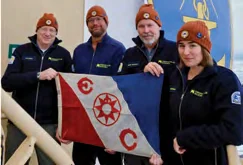
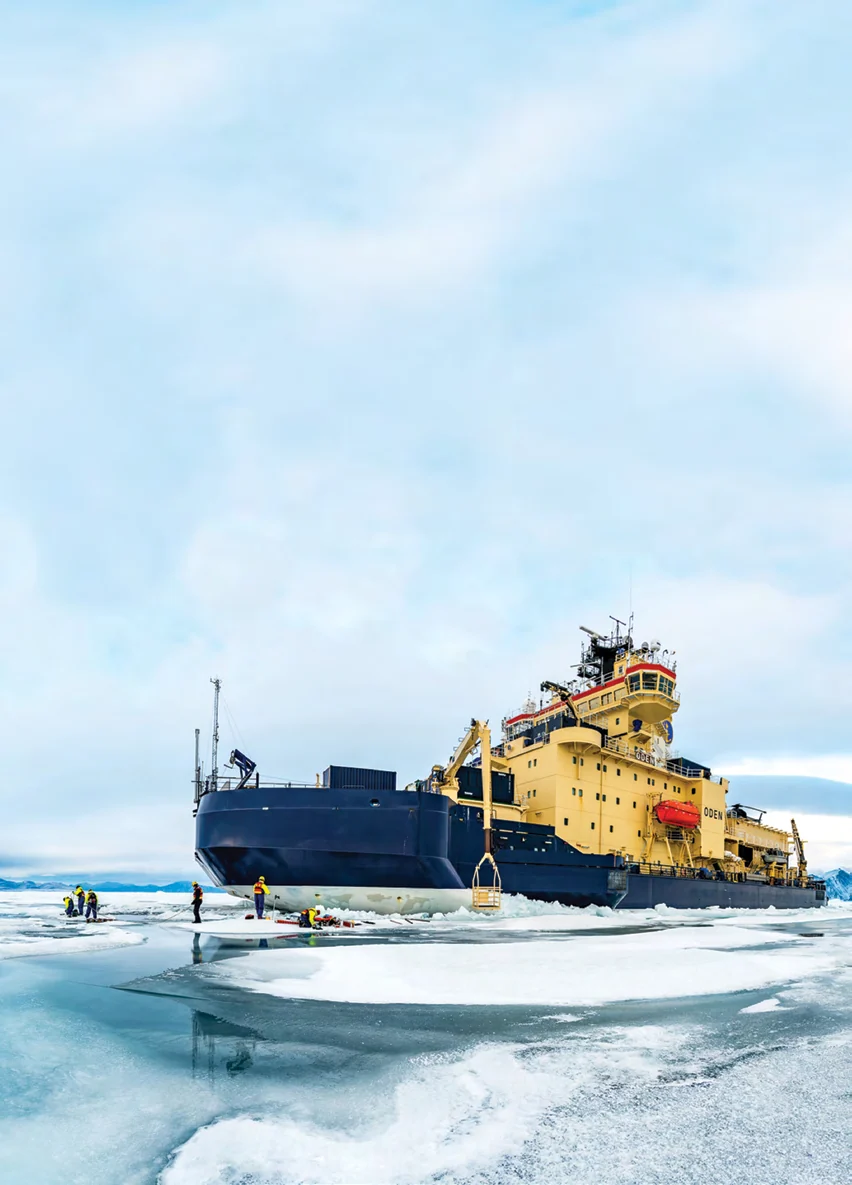
The Swedish icebreaker Oden reached Victoria Fjord, the first ship to do so, mapping the fjord and sampling to understand why the Greenland ice cap is melting so fast.
On 5 August 2024 an international team of scientists flew from Stockholm to Pituffik Space Base in Greenland on a Swedish Air Force C-130 and boarded the Swedish icebreaker Oden. They hoped to reach Victoria Fjord in northern Greenland, further than any ship had navigated around the top of the island. It was the team's third cruise to northern Greenland on the Oden, each reaching further north in a bid to understand what is driving the melt of the ice cap, now the largest contributor to global sea-level rise.
Despite very difficult ice, the Oden reached Victoria Fjord, the first ship ever to do so, and the team made detailed seafloor maps and ocean measurements in the upper fjord. Large icebergs blocked the lower reaches, so the team slung an echo sounder beneath a helicopter and flew around the bergs, dipping it and dropping temperature probes into open water. This let them map the whole fjord, and it showed that the rapid break-up of ice there was probably influenced by warm subsurface water of Atlantic origin. Sediment cores were taken to date movements of the ice sheet and give insight into past climate.
Small uncrewed vessels and aerial drones mapped the above-water and submerged parts of icebergs and glacier ends, and calibrated acoustic measurements tracked the outflow of meltwater from beneath glaciers. Land teams cored lakes around the fjord for environmental DNA recording ecosystem change and human influence, and collected driftwood, shrub and rock samples that will give records of past sea ice and sea level, the farthest-north annually resolved climate records, and the geological history of the region.
The team also took radio-echo soundings of glaciers, continuous weather and atmospheric measurements, and thousands of seawater and sediment samples for nutrients, methane and the Arctic carbon system. They saw many mammals, including 50 narwhals swimming together. After Victoria Fjord the Oden turned northeast hoping to continue around northern Greenland, but ice in the Lincoln Sea was too tough and on 17 September they returned to Pituffik. The team hopes the data and samples will improve predictions of sea-level rise for future policy.
People
- Dr Larry Mayer · FN’17 · Expedition leader
- Dr Martin Jakobsson · FI’15 · Team member and report co-author
- Dr Love Dalén · FI’23 · Team member and report co-author
- Dr Elizabeth Weidner · TM’21 · Team member and report co-author
Places
- Pituffik Space Base — Departure and return point.
- Victoria Fjord, northern Greenland — Coarse placement of the fjord in northern Greenland.
- Lincoln Sea — Where ice stopped the ship's push north; coarse.
Source notes
Lists give 4 August–20 September 2024; the report gives 5 August–17 September. The register uses the report's dates.
Sources
- The Explorers Log, Summer 2024, p. 19 · Flag Expeditions: field projects, 2024 and beyond
The approvals list prints Flag Nº 35 against Larry Mayer for this expedition, with the printed dates.
- The Explorers Log, Summer 2024, p. 21 · Flag Expeditions in Brief
The in-brief section describes the expedition and prints Flag Nº 35.
- The Explorers Log, Summer 2024, p. 41 · Compass Points: New England Chapter
Says Mayer gave a talk on his upcoming flag expedition to northern Greenland to study iceberg movement, ice tongues and climate effects on glaciers.
- The Explorers Log, Fall 2024, p. 24–25 · Flag Returns: GEOEO24
The team's report on the 2024 voyage, headed Return of Flag Nº 35 and Rolex Watch Nº 2.
Photographs