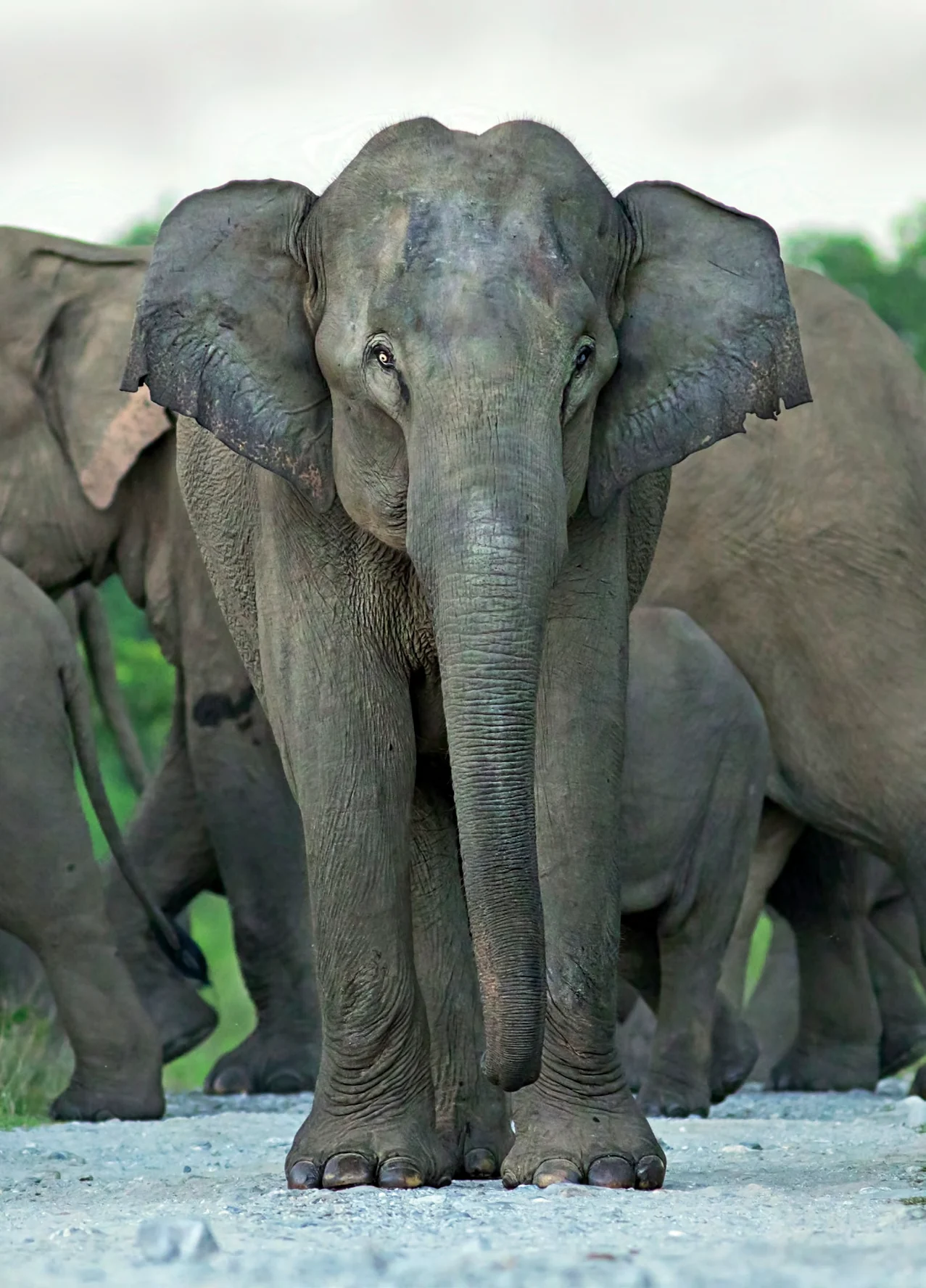
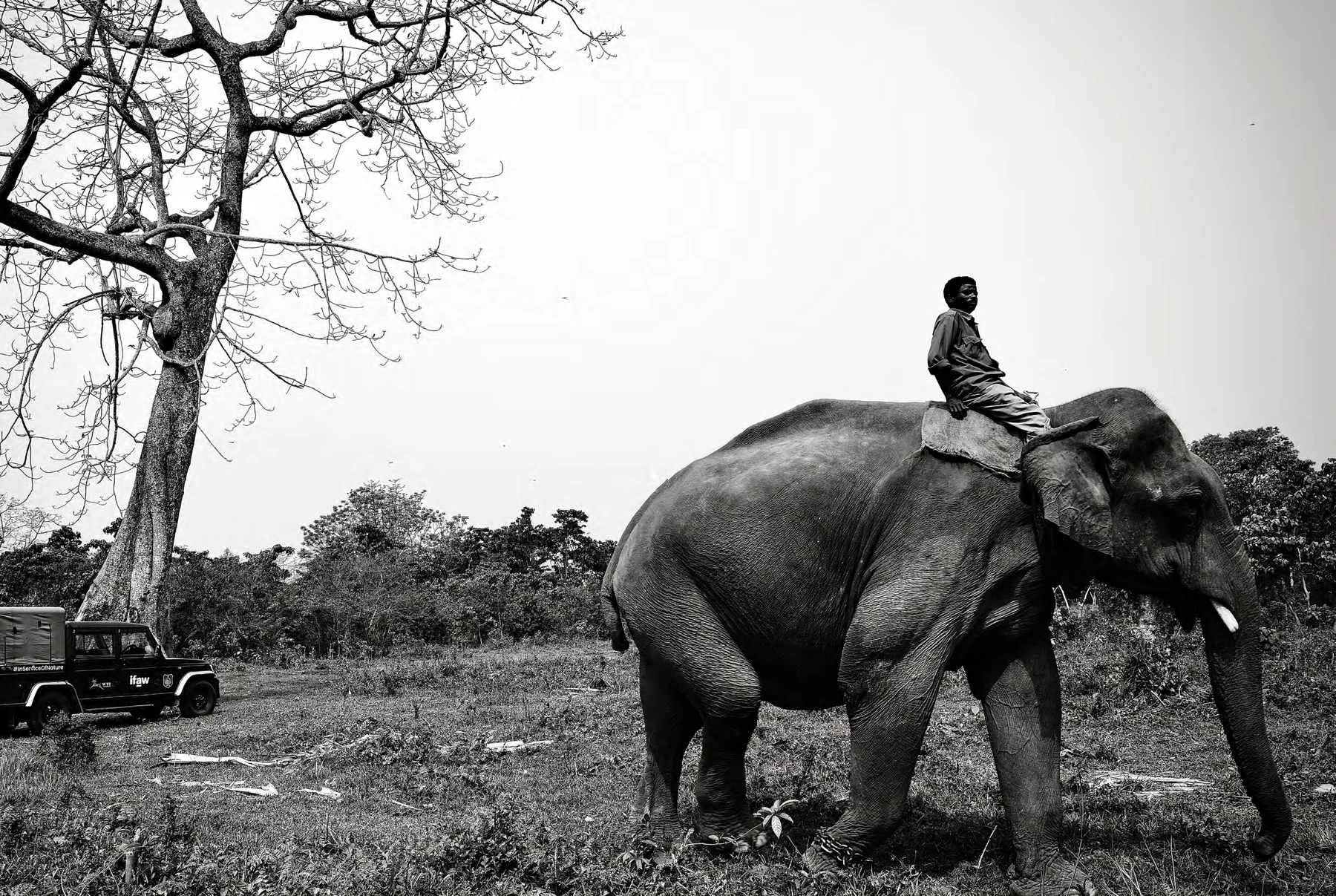
From conflict to coexistence: a quest to save the Asian elephant
Flag 12 · April 7 to May 15, 2025
A five-week, 2,300-kilometre journey through North Bengal, Assam and Arunachal Pradesh following old elephant corridors and recording stories of coexistence between people and elephants.
Kim Frank opens with a moment in the cloud forest of Eaglenest Wildlife Sanctuary in Arunachal Pradesh, where she found a fresh elephant footprint at about 2,950 metres, close to the highest elevation ever recorded for Asian elephants. After roughly 2,300 kilometres of travel across the eastern Himalayas, she was standing on an old migration route in one of the highest and most remote landscapes the animals use.
The journey, from 7 April to 15 May 2025, was the third in her multiyear Asian Elephants: From Conflict to Coexistence Project, which combines oral history, photography, film and writing. The goal was to follow ancient elephant corridors and record stories of conflict, coexistence, conservation and cultural memory from communities that have shared land with elephants for generations. With local partners, Forest Department staff and the Wildlife Trust of India, the team passed through tea estates, forests, river valleys, protected areas and remote mountain villages.
Along the routes they met many examples of coexistence: families leaving offerings for elephants at forest edges, oral histories tying elephants to ancestors and spiritual belief, and conservation groups finding ways to keep wildlife moving through broken-up landscapes. Frank says this trip marked a turn in the project, from documenting conflict toward spotting growing coexistence, including crop-sharing, rewilding and corridor restoration.
The team was Frank, cinematographer Sourav Mandal, driver and field assistant Anil Bishwarkarma and AI-translation scientist Alex Waibel. In North Bengal, Waibel collected field language data to refine a prototype meant to ease communication among scientists, conservationists, filmmakers and communities who speak different regional languages. The work had an Explorers Club Kensington Conservation Grant and was done with local communities, the Wildlife Trust of India, Forest Department staff and regional conservation groups.
People
- Kim Frank · FN’18 · Flag carrier and expedition leader
- Sourav Mandal · MI’25 · Cinematographer and team member
- Anil Bishwarkarma · Driver and field assistant
- Alex Waibel, PhD · FN’24 · AI-translation scientist
Places
- North Bengal — Region only; the Log names no site.
- Assam — State only; the Log names a Kalabari reserve forest and a mahout village in captions.
- Eaglenest Wildlife Sanctuary, Arunachal Pradesh
Source notes
The Log notes this was the third journey of a larger project. Flag 12 is also printed in this issue against a different expedition (Sagnières), so the number alone does not identify it.
Sources
- The Explorers Log, Spring 2026, p. 20–23 · Flag Returns: Return of Flag Nº 12
Frank tells of the 2025 elephant corridor journey through North Bengal, Assam and Arunachal Pradesh, its team, findings and grant support.
- The Explorers Log, Fall 2025, p. 24 · Flag Expeditions in Brief: back from the field, reports received
The portfolio entry for Flag 12 names Kim Frank, gives the dates as April 7–May 15, 2025 and describes the aims in a short paragraph. It sits among expeditions that are back from the field with reports received.
- The Explorers Log, Winter 2025/2026, p. 12 · Flag Expeditions in Brief: back from the field, reports received
The portfolio entry for Flag 12 names Kim Frank, gives the dates as April 7–May 15, 2025 and describes the aims in a short paragraph. It sits among expeditions that are back from the field with reports received.
Photographs